Monday, 9 March 2015

Is Amina Yusuf The New Malala Yousafzai?

Most of us know about or have at least heard about Malala Yousafzai, the Pakistani women's rights and female education activist. She disobeyed the Taliban present in Pakistan and insisted that all girls in the country were allowed to access education. However, she was shot by the Taliban in the head, but managed to survive. Malala was honoured with the Nobel Prize because of her courage and her struggle at the age of 17. If you feel inspired by her story, then its time you learn about Amina Yusuf. Who is she? Read on....

Meet Nigeria’s Malala

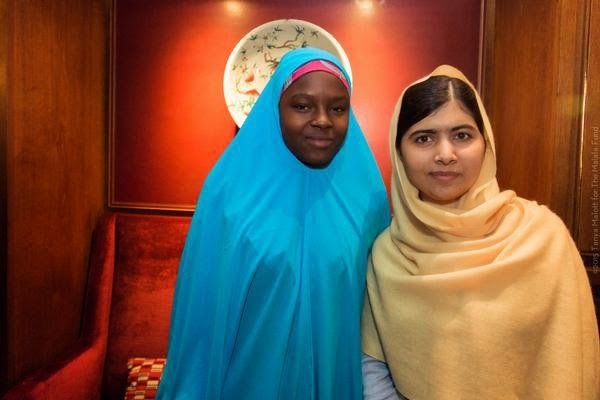
Amina Yusuf is an 18 year old Nigerian activist and an advocator of education for the girl-child in Nigeria. Moreover, she also acts as a mentor for young girl students at the CGE (Center for Girls’ Education) in Nigeria. She was selected as one of the 5 girls to join the youngest Nobel Prize laureate Malala Yousafzai, while she accepted the prize in Oslo, Norway.

The Center for Girls’ Education honoured Amina with a scholarship, in association with the Population and Reproductive Health Initiative, a partnership among The Bixby Centre, the Ahmadu Bello University Teaching Hospital. And the University of California, Berkeley. Currently Amina is determined to ensure that Nigerian girls get the right educational opportunities and she has vowed to keep moving forward with her efforts and address issues and challenges in Nigeria.

They Can’t Stop Amina

However, she admits that she is somewhat scared like other girl students in her country, especially after the Chibok abduction in April 2014. Amina said “I want world leaders to consider attacks on girls’ education. Insurgency in Nigeria means that there is fear in my community and fear for girls’ safety. Before now, we all thought that school was the safest place but now it’s scary. I’ve heard that many girls in boarding schools have been taken out by their parents or organisations for security reasons.”

She added “People are scared that their girls may be abducted too. I know that I’m scared too, but it won’t stop me from doing what I aspire to do. People weren’t able to stop Malala, and they can’t stop me.”

There’s Malala in Amina

Speaking about Malala Yousafzai, Amina Yusuf praised her efforts and said she is highly impressed by what Malala has achieved and how much progress have been accomplished by the Pakistani activist. Regarding her meeting with Malala in Oslo, she said “While I was there I realised that Malala’s award means that girls all over the world, including here in Nigeria, have won the Nobel Peace Prize. Malala’s voice is the voice of every girl in the world, and many girls tell me that because she invited me to join her in Oslo, they see Malala in me.”

Talking about her attempts, the Nigerian activist said that she has become a mentor at CGE “to give more girls opportunities. If it weren’t for that, maybe I would have been married off by my parents because they wouldn’t have been able to pay for my education.”

Amina added “I now mentor 15 girls, aged between 11 and 14, and assist one of the senior CGE mentors. My friends and all my younger brothers and sisters call me Malala now.”

What do you think about Amina Yusuf’s efforts? Can she improve the scenario for girl child education in Nigeria? Share your thoughts and opinions with us by commenting below.

Monday, 19 January 2015

Is Online Learning The Right Solution For Students In Nigeria?

Source::bit.ly/1ygjMcJ
The northeast region of Nigeria is frequently highlighted by occurrences of arbitrary bombings, kidnappings and militant attacks, especially since the rise of violent campaigns in 2009 led by the insurgent group Boko Haram.

Learning Challenges In Northeast Nigeria


Source::bit.ly/1DTYR2w

If you are a parent in the cities of Bauchi or Damaturu located in northeast Nigeria, how would you react when Boko Haram insurgents plant to attack local schools in the region? Sadly, parents in the uncertain regions of north-eastern Nigeria have to deal with such heartbreaking decisions. So should you send your child to school?

Irrespective of what you decide, the decision for most parents in the area has already been made with closing down of more than 800 schools due to insurgency and insecurity. A separate assessment and analysis made by the CCSG (Coalition of Civil Society Groups) has revealed that more than 194,664 students are compelled to discontinue attending their schools due to the threats of militant attacks. The President of CCSG, Etuk Bassey Williams, believes that as a result of the closing down of schools the nation will fail to meet the benchmarks set for primary school enrolment in 2015, with below 80% enrolment of children who are old enough to attend schools.

However there is still hope for Nigeria. Many academic experts have suggested that online education should be adopted in school curricula as a prominent tool that can help in teaching students who are unable to attend schools, specifically in the northeast regions of Nigeria.

Can Online Education Offer The Required Solution?


Dr. Dipo Fashina, the previous President of Academic Staff Union of Universities (ASUU), recently said that the education system followed in the country is counterproductive and flawed. It is in a strong need of renovation and reorganisation. Fashina said “Education is the major thing that promotes being at the height of development and we are not there yet.”

Online education has already gained significant popularity among learners from different regions of Nigeria. The number of students enrolling for online learning programmes is increasing constantly, especially due to the ineffective education system. This only creates unprepared graduates who are unable to find any employment opportunities.

If you are a Nigerian student who wants to pursue quality education and earn accredited qualifications from recognised institutes, then online programmes are undoubtedly the best option for you. Moreover, online programmes are highly affordable and cost only a fraction of traditional college tuition fees.

Expanding The Reach Of Education


Nowadays, it has becoming even easier for Nigerian students to pursue online study as the country has more than 175 million monthly mobile phone subscriptions. The fact is now online education programmes are being customised for African learners and you can find numerous online platforms from around the globe, including Africa. Beni American University, founded by Gossy Ukanwoke, is the first online learning university in Nigeria.

Another popular African online learning application is the MTN mAcademy, which caters to students throughout Africa. It provides various courses such as teaching, banking and information technology. The West African Examination Council (WAEC) has also endorsed the mAcademy platform which is considered as a model for how an online platform should be executed for teaching students in the northeast region of Nigeria.

As the telecommunications sector is developing in the country with growing capabilities for internet broadband connectivity, the reach of online learning will spread even further to help learners in uncertain regions pursue quality education effectively.

What do you think about online learning? Can it help students in Nigeria’s northeast? Share your thoughts and views with us by commenting in the box below.

Article source:: bit.ly/1Cs4UXN


Tuesday, 22 April 2014

Why Should We Teach Character Education in the Classroom?

At present it has become imperative that children are provided character education in schools throughout the world. It is clear that in many countries youths are turning hostile due to various reasons like depression, frustration, fear of failure, personal insecurities and other related problems. As they are unable to cope with youth-related stress, most of these students are turning to violence to for a solution.
Source: bit.ly/1i5prKU
Most schools now have students from different backgrounds and cultures and thus each have a different mindset. Thus it is becoming increasingly important that we teach them about basic human values. Teachers should become proactive and teach their students how to cope with their problems and achieve success. We need to take the onus to deliver the right messages and instill values in them so that they can grow to be respectable citizens and contribute to the national development.
As students spend most of their time in schools, it is undoubtedly one of the main socialising agents for children. In this modern age, family values have been reducing due to various financial and social pressures on parents. Teachers tend have almost equivalent importance as parents in the lives as children. The knowledge teachers provide to their children enables them to become successful in life. Hence the role of teachers in shaping the future of a child is highly significant.
Many experts argue that schools focus on individual and human rights that might prove to be disadvantageous for traditional social norms. The teaching offered by the educational institutes tends to reject the unsaid behavioural codes laid down by society. As a result numerous students with advanced academic degrees and qualifications do not possess the resources to cohabit in a conventional society. As students fail to follow the social rules and regulations and behave in whichever way they feel, it leads to violent outbursts at many occasions.
It is highly unfortunate that we rarely encourage our students to understand necessary values and virtues and instead focus more on English, maths, science, religious studies and others as these subjects are essential for acquiring success in life. In countries like Nigeria, schools fail to make the students understand the importance of their character formation and moral and individual identity. Rather the present education system is motivating the students to trust in themselves, even though they lack the basic values.
Although schools are expected to teach students the values of morals and social virtues for their personal development but they are currently doing just the opposite. Most graduates lack the motivation to read as much as they are supposed to and hence these students fail to mature as respectable citizens with high moral standards and good character. Thus it becomes imperative that the authorities take steps to incorporate ethics and character education in academic programmes in Nigeria.
Teachers need to be more focussed about the character development of students as the country is facing serious disorderliness from its youth. We must realise that imbibing values is much different from simply educating students about different subjects. It is only by teaching them about human values we can provide the foundations for developing character to our students.
The education system should stress on teaching values first and then educating the students about science, maths and English in order to mould the young students in a better way. Schools also need to encourage the parents and family members of the students to help improve ethics and character education. If the students have a supportive environment at home, then it will help the teachers to have a better impact on the young students.
Education is important for every child as it helps them to progress in life and expand their knowledge. It is also important to help them grow into well-behaved and promising adults who would pave the way for social development. We can achieve this only by integrating character education in our schools.

Wednesday, 19 March 2014

21st Education System in Nigeria seems Far Refined & Updated

Source: bit.ly/1qTGu5D
Education is such a sector where the more you will invest; the better will be your returns, and this is one of the biggest truths that must be realised by governments running underdeveloped nations. Countries like Nigeria always had issues against providing educational support to students. A nation with a deteriorating economy, bleak infrastructure and political disturbances can never expect to ensure quality education to its citizens and Nigeria in this context had been quite industrious over the years to fight out the academic challenges as much as possible.  

21st century comes with a different story for Nigerian education

Source: bit.ly/OB7w2w
The 21st century says a different story about Nigeria. Despite following the 6-3-3-4 education system that engages students towards pursuing education at primary, secondary and tertiary levels, Nigeria has put up a tremendous performance by bringing around 4.3 million internet users in the last few years.

Owing to the grand initiative taken by the National Open University of Nigeria (NOUN) towards making students study flexible through distance learning, the scenario of education has undergone massive improvements in comparison to those days when there were not even proper platforms under which students can attain quality education.

Distance learning unlocked new learning opportunities for Nigerian students

Distance learning has indeed been an ideal alternative for remote learners in Nigeria being able to enrol in a course without obeying the rule of attending classes has given students new way to complete their courses independently. In other words, distance learning Nigeria has brought opportunities for students to get involved in lifelong learning that would be possible from anywhere one wish.

Hulsmann pointed out four key features of open and distance learning that actually helped students to understand the definition of this learning mode:

1.     The teachers and the learner would remain separated from each in terms of place and often time
2.     Whichever education institution would be offering an online course must be accredited at any cost
3.     Online instructors would make an extensive use of technical media that might comprise web-based learning, pre-recorded videos through DVDs, social networking etc.
4.     A two-way communication process will be involved in this mode of learning. Tutors will be interacting with their students either asynchronously or synchronously.

Nigeria finally welcomed changes in its education system

Source: bit.ly/Ntjhr4
Later, distance education in Nigeria had such a positive impact on students and even working professionals that they were finally released from the compulsion of travelling abroad and enrolling in full-time courses. Financing for higher studies was no more a burden for many parents in Nigeria. Major initiatives were taken by the government and there were several renowned universities that also partnered with several Nigerian academic institutions. As a result, students got the opportunity to obtain their education online as per their own convenience.

Finally, the education system that badly required a change since years has now achieved a new look with the implementation of digital learning courses in classrooms at several schools and colleges. Rather, education in Nigeria has now acquired a new meaning and significance with its digital presence which would no more be underestimated like what it had been for years.


Article Source: bit.ly/1lNYuuy, bit.ly/1qTEvOT

Saturday, 15 March 2014

5 Key Factors that Make Online Learning Effective for End Users

Source: bit.ly/1iNeVp3
As young people today are growing proximity with touch-screen devices, there is question mark over the survival of current classroom-based education model. The apparent change in higher education has given massive open online courses (MOOCs) a chance to grow its share in academic market. People have greater expectations from the online learning.

When it comes to adoption and completion of courses, online education technology has produced both promising as well as lacklustre results. However, those who advocate for web-based education technology have firm belief that the traditional classroom is on the edge of a remarkable change.

There are some online education companies, working in the partnership with universities and colleges, which have come up with Initial Public Offering (IPO) for raising the huge amount needed for the expansion of online courses across the world. They have roped in a few reputable universities like Berkeley, USC, Georgetown and American University to offer online learning experiences that match or surpass the education quality found on campus.

Advantages of web-based learning platforms

Source: bit.ly/1kST5oI
Web-based platforms have given people the power to replace or assist in many traditional interactive methods, such as shopping, dating and banking. Nowadays, the internet-based platforms have expanded the learning boundary. Let’s have a look at the benefits of web-based learning platforms.

·         Affordability – Students can access more than 300 lecture hours provided by Harvard, MIT and Berkeley for free on YouTube. MOOCs are free and open to the prospective participants. Other online learning platforms are also cheaper for the students keen to enrol in online courses. In comparison to brick and mortar schools, the online learning medium is affordable because of its lower overhead.

·       Convenience – When it comes to convenience factor, online learning lets the end users take courses at their own pace and own time. This learning medium is far more convenient, in comparison to the traditional classrooms. To add to the effectiveness of the distance learning programs, there are several online communities and forums built around the courses.

·      Ease of access – Business schools were the ones to adopt online learning first, because it attracted even those students who were not likely to go for any type of higher education. A number of students with diverse mix of backgrounds, experiences, geographies and motivations are attracted to MOOCs.

·     Customizability – Online learning platforms allow students greater flexibility in terms of what, when, how and how much they intend to learn. According to some well-known educationists, online learning provides learners control over their learning processes.

·    Preparation – The eminent personalities in education and job sector say that future employers look for the job candidates who are well versed with dynamic learning. Though it may sound expedient affirmation from the online education providers, but when we take a look at the training tool in corporations, online learning has become the preferred training tool. Now, the argument might already seem correct to you.

Colleges and universities have always served to both innovation and tradition. In the near future, educational delivery system might become the blend of both in-person and online learning, though a lot depends on the innovators and the likes of young learners. 


Article Source: huff.to/1nrComd

Thursday, 27 February 2014

Nigerian Universities have progressed Commendably in Last Three Years

Africa’s most populous country, Nigeria has almost doubled the population of Egypt and Ethiopia. Nigeria has 63 percent of young population below the age of 24 and the relative annual growth rate of the country is 3.24 percent.

Source: bit.ly/1fsQKOT

The incredibly high young population means that government is at present hard pressed to meet. The number of students has increased from below 15, 000 in 1970 to about 1.2 million in 2013, at the tertiary level alone. It is because of this huge growth in demand, a large number of tertiary students annually misses out because there are not enough seats in the educational institutions to meet the demands. (Source:bit.ly/1cU9unJ )

The delivery of quality education in Nigeria is sole responsibility of federal government. Earlier, the state of education sector in Nigeria was very poor, mainly due to the lack of funds. Undoubtedly, federal government is accountable to provide quality education, curriculum design, recommend national education philosophy and direction to the education policy of the country.

Source: bit.ly/1eyUqZd
However, the time has changed and Nigerian universities have started getting local and international accolades for the transformation under the recent administration. Slowly and gradually, Nigerian universities have started to compete with the best on the continent as well as global platform.

The improvement marked by Nigerian universities is barely brought to the notice because most NGOs and media organisations are not keen on assessing and inspecting the academic and infrastructural plans being implemented by the current Jonathan government. On the other hand, the World Bank thinks otherwise, as it has selected 10 public and private universities from Nigeria as Centres of Excellence for the exceptional research programmes in societal development.

The World Bank would grant each of these selected African Centres of Excellence, ACE, a sum of $8million USD, N12.8 billion to work on approved research projects. The funds given to the selected ACE is for the duration between 2014 and 2017. Most importantly, out of 18 African Centres of Excellence chosen by World Bank, 10 are from Nigeria.

There are seven federal, one state-owned and two private universities in the list of universities to benefit from World Bank policy. The massive investments from the Jonathan administration made the African Centres of Excellence possible. It will strengthen the ability of the National Universities Commission to observe the activities of universities in Nigeria.

The wise investment by the federal government of Nigeria and efficient observation by the NUC are the real factors behind the accomplishment by Nigerian universities. Since Jonathan got elected to lead the federal government in country, the face of university education has changed for good. Such is the progress made by education sector in Nigeria that the team leader at World Bank, Mr. Andres Bloom, expressed keen interest to partner with the Nigerian government. The level of commitment shown by the project officials was also satisfactory in his eye.

Nigeria will continue to receive the gratitude for expansion of university education. Apart from World Bank, there are plenty of other international agencies keen to collaborate with federal government of Nigeria to further intensify the benefits attained in previous three years.
The Nigerian universities have come a long way and started to taste the fruit of success after the initial days of hard work. Let’s hope that higher education sector in country will continue to rise and yield positive results.

Article Source: bit.ly/1fsQ2ks

Thursday, 5 December 2013

Online Education: A Trend Changing The Nigerian Education


Source: bit.ly/1iCvcBe

Internet learning, Online Education, or Distance Learning – whatever you prefer to call it, is a big trend in today’s academic world. For most it’s a flexible knowledge enhancer programme that hardly demand any sacrifice in your professional and personal life. Moreover, it is making education available for all overcoming the physical, geographical and financial predicaments. From students in China who can’t afford to fly abroad to the learners in African continent living below poverty level – online education is bringing hope for everybody.

Helping to overcome the barriers

Demand of the employers is increasing. They want smarter performance at workplace. So, employees who want to improve their performance are keen on attaining higher level degrees. Hence, demand for higher and effective education is increasing all over the world.

People residing in developing continents are opting for study abroad as their educational resources aren’t satisfactory enough. For example a surging popularity for the courses available in UK Universities is being noticed among the Nigerian students over the last few years and it’s increasing at a rapid rate. The Higher Education Statistics Agency in the UK (HESA) shows that 17,640 Nigerians enrolled to study at UK universities during 2011/12 compared to 5,385 for 2003/04. Selma Toohey, international recruitment officer for Sub-Saharan Africa at Nottingham Trent University, says - “More people are realising that studying in the UK is a realistic option and many find it to be a real benefit to experience living in another culture while studying for their degrees.”

Fresh avenues toward brighter future

Well, if your commitments and responsibilities are keeping you away from such pleasures then new age learning options are ready to help you. In addition to that, visiting a foreign land to pursue a degree is still a far cry for many people around the world. So, the best Universities are opening online curriculum to reach out to those who are unable to afford higher education.

Source: bit.ly/192CrfB
It’s not that Nigerians don’t have good educational institutions but they don’t operate properly as the government doesn’t fund for them. Moreover, most of them are over-populated and have more than enough academic staffs. So, students are gradually moving toward online education. Initiatives are being taken and renowned institutions are coming forward to change the present environment. Of late, Intel launched an online solution for the new age learners in Nigeria. Their mission is to help them access economical and free digital learning resources. The education solution, Learn Marketplace, and Intel Explore are introduced and designed to facilitate the traditional complications of learning. Speaking about the collaboration with Intel, Ehizogie Binitie, Co-Founder And Chief Technology Officer of Rancard, said,
“We recognise education as a major challenge across the continent and believe the platform we have deployed together with Intel for the African market is an important step in solving this challenge, equipping both educators and content creators with the tools they need to create and distribute high quality educational content.”

Attaining education through online can be a great technique for learners with busy schedule or having geographical and financial constraints. Including the options of flexible scheduling, audio-video instructions, and relevant choices in courses, internet classes offer you to be a part of global classroom and participate in discussions where your mates will be commenting from different parts of the world with you. It couldn’t be more exciting than this for the students of developing countries like Nigeria.